

 Accountability.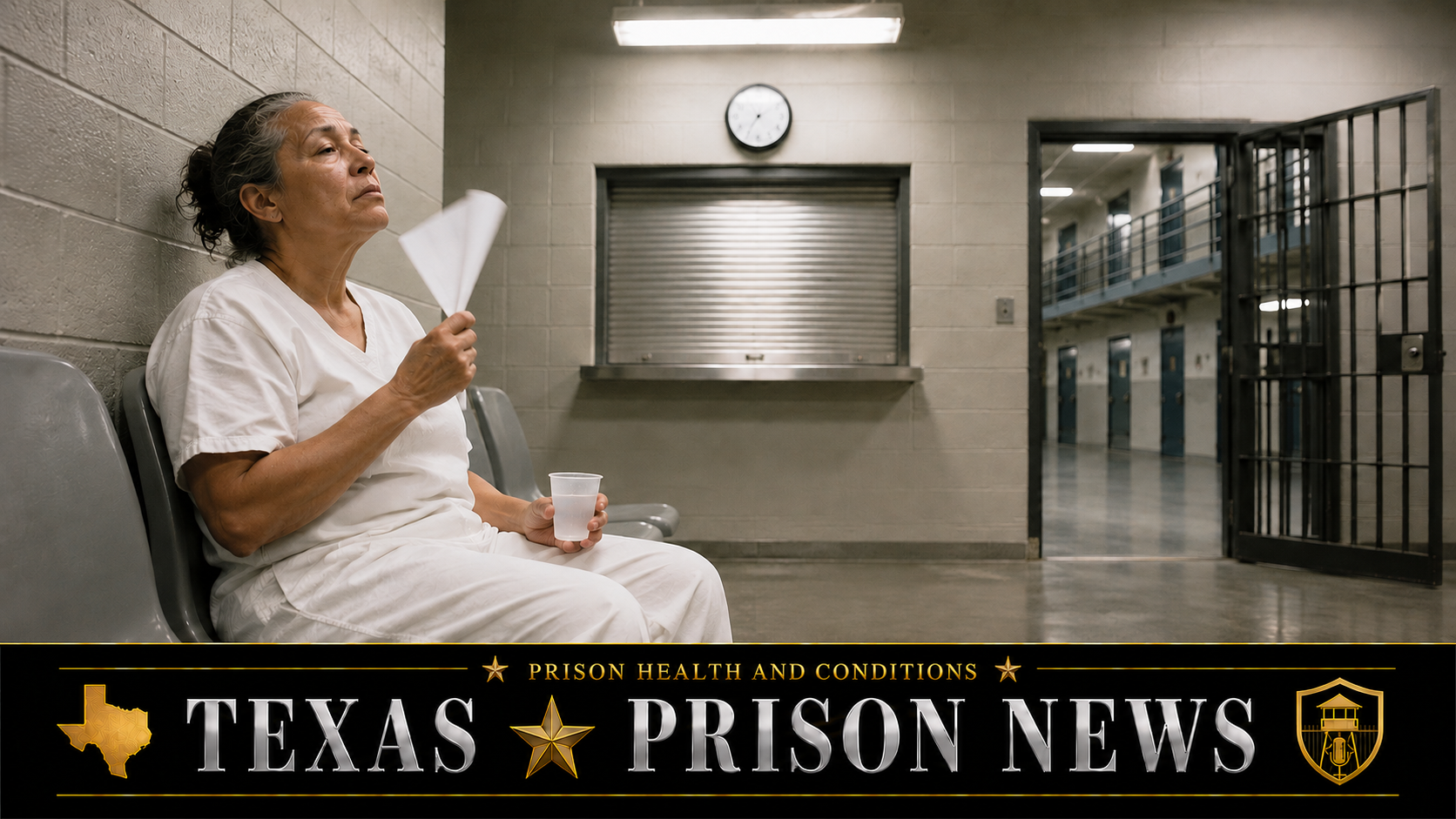

Incarcerated journalist Kwaneta Harris, held in a Texas prison without air conditioning, has publicly described being unable to escape heat during hot flashes, being denied ice packs or over-the-counter medications, and being repeatedly accused of “medication-seeking” when reporting menopause symptoms — experiences that mirror findings from a national policy analysis published September 1, 2026, by Prison Policy Initiative, which found that Texas has no publicly documented correctional policy addressing menopause care.
The Prison Policy Initiative reviewed department of corrections policies, handbooks, and related documents for all 50 states, Washington D.C., and the federal Bureau of Prisons. Researchers found menopause mentioned in only ten states’ documentation, and Texas was not among them. Of those ten states, only five — Alabama, Alaska, Mississippi, Oklahoma, and Oregon — had language explicitly referencing menopause, and none of those documents specified what medical care, education, or resources are actually provided to incarcerated people experiencing perimenopause or menopause.
Harris, who described her experiences in mainstream media outlets including Ms. Magazine and In These Times, told of receiving hormone therapy for two months with no prescription refill, despite menopause symptoms lasting an average of approximately seven years. In July 2026, The Marshall Project published a guide Harris created for navigating perimenopause and menopause in prison, covering what symptoms to expect, how to advocate for medical care during incarceration, what non-medical options may be accessible for symptom relief behind bars, and what medical interventions incarcerated people can pursue.
The Prison Policy Initiative’s analysis found no national or international standards of care for menopause in prison. According to Bureau of Justice Statistics data cited in the report, more than 15,000 women aged 50 or older are held in state and federal prisons nationwide. Between 2008 and 2023, the proportion of women in state and federal prisons who were 50 or older more than doubled, growing from 8.3 percent to 17.6 percent. Qualitative research reviewed by the organization found that incarcerated women experiencing menopause symptoms are almost entirely reliant on peers for information, frequently have their symptoms dismissed by medical staff as insufficient to require treatment or as pretexts for obtaining medication or avoiding work, and have been issued disciplinary infractions for soiled clothing or bedding resulting from menopause symptoms.
A research study of North Carolina prisons, cited in the report, found that fewer than 5 percent of women in custody were receiving estrogen-containing medications, even though hormone therapy is considered the most effective treatment for menopause symptoms. The report also noted that some older incarcerated women are prescribed medications for hypertension, cardiovascular conditions, or mental health that can worsen menopause symptoms or conflict with potential treatments.
The Menopause Project, operated by Impact Justice and currently active in California, Arizona, and South Carolina, has produced physician guides, provider trainings, educational materials for incarcerated people, and peer support programs. The organization reported preliminary results indicating improved connections between individuals and medical care, reduced provider knowledge gaps, and increased staff and incarcerated-person awareness of menopause. The Prison Policy Initiative’s report states that other states can partner with the Menopause Project or follow its model, and recommends that correctional systems standardize menopause education and care in formal policy, expand prescription formularies to include hormone therapy and other evidence-based treatments, and create peer support programs.
Source: Prison Policy Initiative — https://www.prisonpolicy.org/blog/2026/09/01/menopause_policies/