

 Accountability.
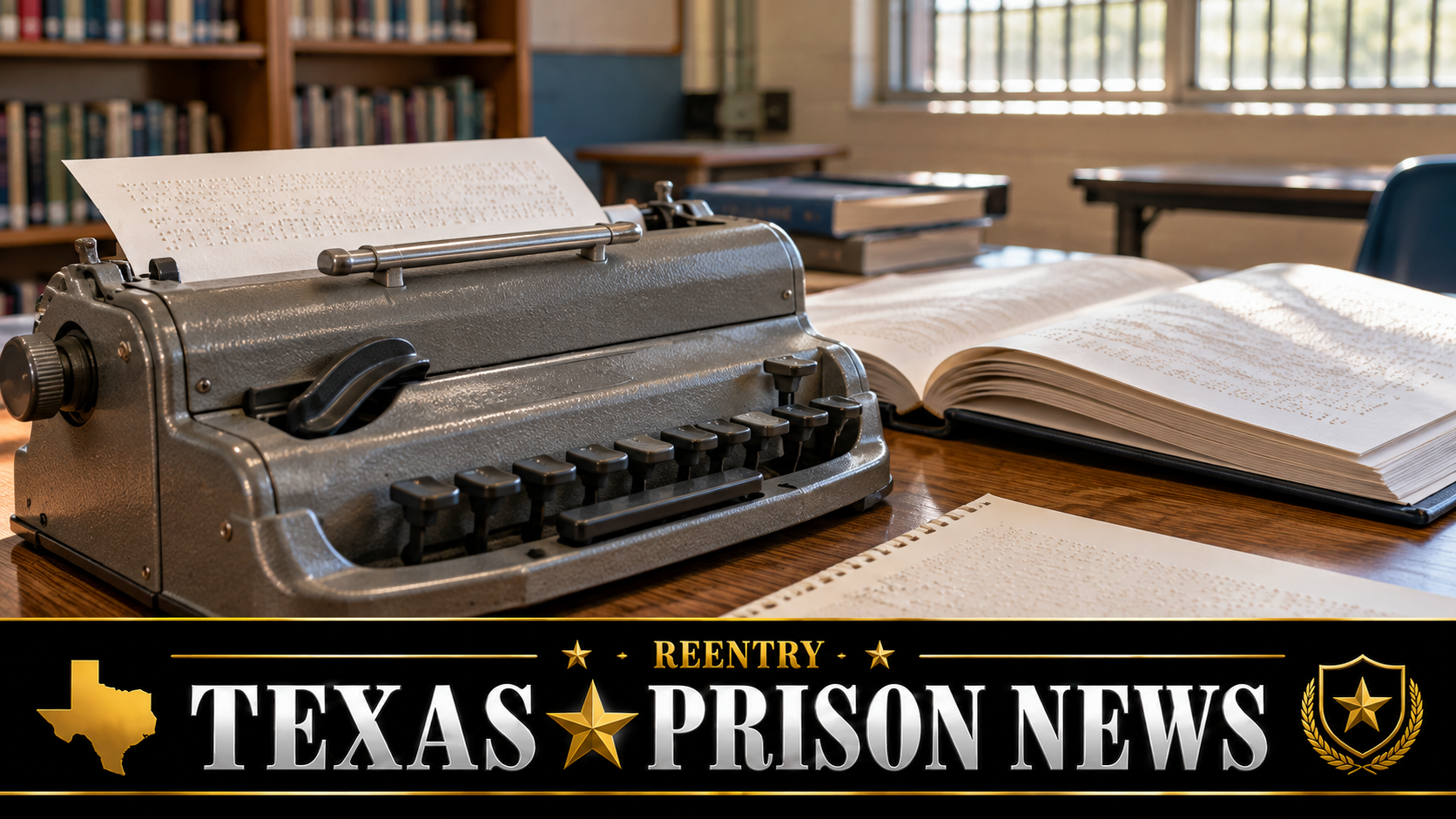

GATESVILLE, Texas — In the back of a women’s prison in Gatesville, about 90 incarcerated women spend their days turning textbooks into braille for blind students across Texas and beyond. Many of them leave prison with a skill that can pay $45,000 a year or more.
The Billman Braille Center at the Patrick O’Daniel Unit is the largest of 45 prison braille programs in the country and the only one in Texas, the Texas Standard reported in September. It has operated for more than 25 years.
How the program works
Women at the center transcribe books on computers and practice on Perkins Braillers, typewriter-like machines that punch braille dots into paper. The work includes complex textbooks, such as anatomy books whose illustrations are recreated with raised textures so blind readers can feel them. Participants work toward Library of Congress certification in braille transcription.
The work is unpaid, like most prison jobs in Texas. Demand to join is high: the center received more than 300 applications from women’s prisons around the state for 15 openings this year.
Prison programs like this one do much of the country’s braille work. In fiscal year 2025, prison braille programs transcribed 70% of all textbook orders for the American Printing House for the Blind, according to the head of its National Prison Braille Network. Automated braille software still makes frequent errors, so trained human transcribers remain essential, a Rice University linguist told the Texas Standard.
A career after release
The center is named for Delores Billman, a former correctional officer who started it to give women job training at a time when most prison programs served men. She and the first group of participants taught themselves braille until they earned certification.
“I wanted them to have a job and a career that would be meaningful to them also,” Billman said.
Professional transcribers are paid by the page. Beverly North, who was released in 2008 and now directs Visual Aid Volunteers, a braille transcription company in Garland, said earnings range from about $45,000 to more than six figures a year. “It gave me a life,” North said of the program. Former participants have built a network that helps women coming out of prison get started in the field.
Christina Harris, a former elementary school teacher who has worked at the center for eight years, told the Texas Standard she hopes to keep transcribing braille after she is paroled.
For more on job training and life after prison, see our Reentry coverage.