

 Accountability.
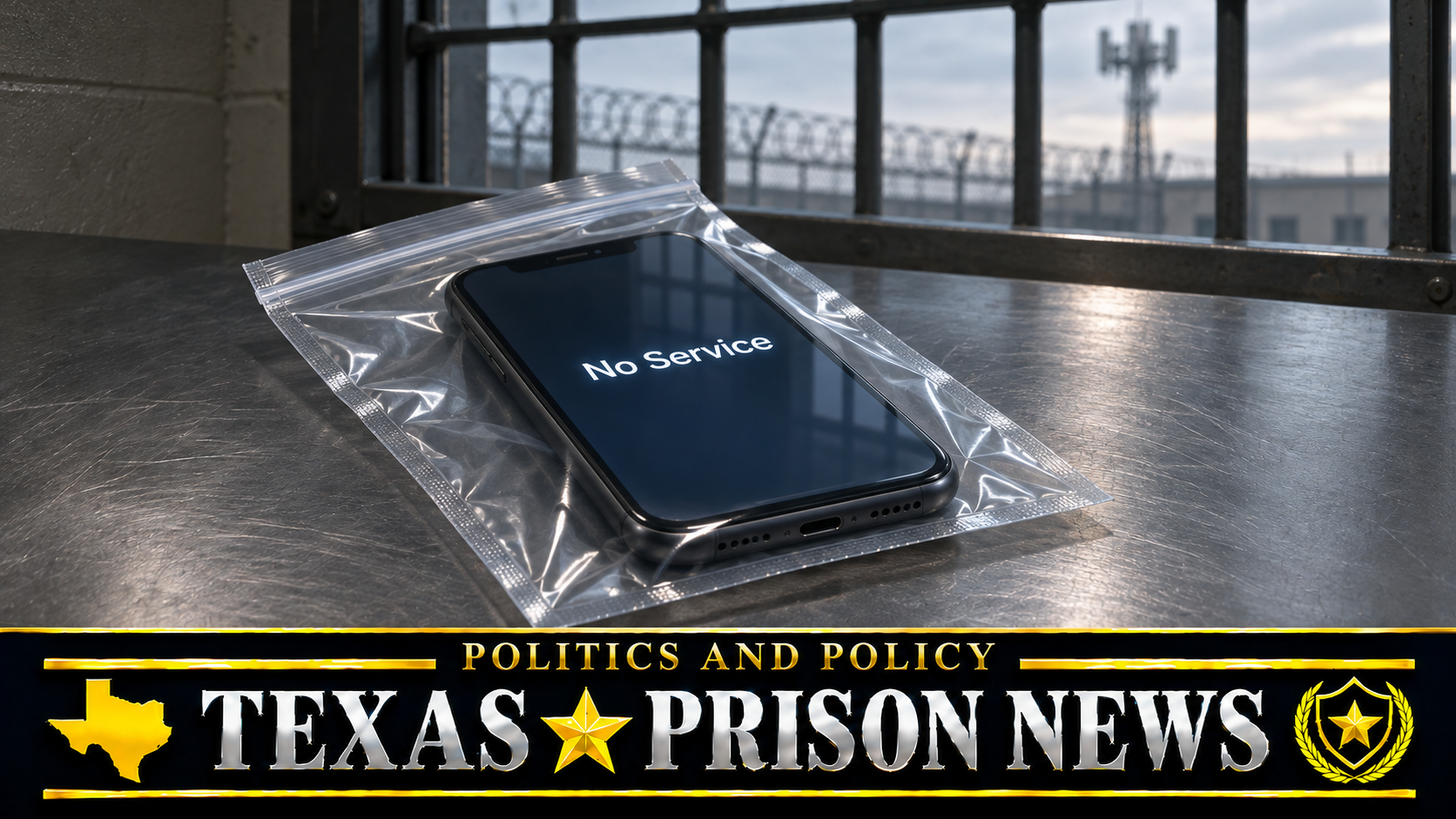

AUSTIN, Texas — The Federal Communications Commission will vote Nov. 19 on rules that would, for the first time, allow state and local prisons and jails to use equipment that jams signals from smuggled cellphones. If the rules pass, TDCJ and Texas county jails could apply for permission to block contraband phones inside their facilities.
FCC Chairman Brendan Carr announced the vote Oct. 28 at a law enforcement event in Little Rock, Arkansas, alongside U.S. Sen. Tom Cotton and Arkansas Attorney General Tim Griffin. Carr said contraband phones have been used to order violent attacks, coordinate gang activity and run criminal operations from inside prisons.
What the rules would do
Federal law has long barred state and local corrections agencies from operating radio jammers because they interfere with licensed wireless signals. The FCC proposed changing that in September 2025. The plan up for a vote would create a licensing system that lets eligible facilities run approved jamming equipment inside defined areas, under technical requirements meant to keep the signal blocking from spilling outside the walls.
The program would be voluntary. No prison or jail would be required to use jammers, and none could start without approval. The proposal does not say what the equipment would cost or how soon it could be running.
The Texas picture
Smuggled phones are a long-running problem in Texas prisons. During the 2023 statewide lockdown, TDCJ recovered 584 cellphones and 713 phone accessories, according to the agency’s final report. Earlier this year, investigators seized more than 100 phones in a drone-smuggling case at the Michael Unit in Tennessee Colony, where seven people were arrested. Phones also come in through staff. In October, a former Holliday Unit officer was indicted on a bribery charge tied to an inmate’s cellphone.
Texas Attorney General Ken Paxton was among 23 state attorneys general who signed a December 2025 letter supporting the FCC’s plan.
Concerns about 911 calls
The wireless industry group CTIA has warned that jammers can interfere with legitimate cellphone service, including 911 calls, near prisons. That is a real concern in rural Texas, where many units sit close to homes, highways and small towns. Supporters say containment rules, licensing, advance notice and testing are designed to prevent that, and that prisons have other ways to call for emergency help.
Jamming would not stop drugs, tobacco or weapons from being smuggled in, and it would not replace searches or drone detection. It would only target whether a smuggled phone can connect to a cell network.
What it means for families
The rules would affect only contraband phones. Approved ways to stay in touch — TDCJ tablets, monitored phone calls, video visits and messaging — would not be blocked. Families who hear from a loved one on an unauthorized phone should know that using or possessing one is a serious disciplinary violation in TDCJ and can bring new criminal charges.
Texas Prison News will report the outcome of the Nov. 19 vote and whether TDCJ plans to apply.