

 Accountability.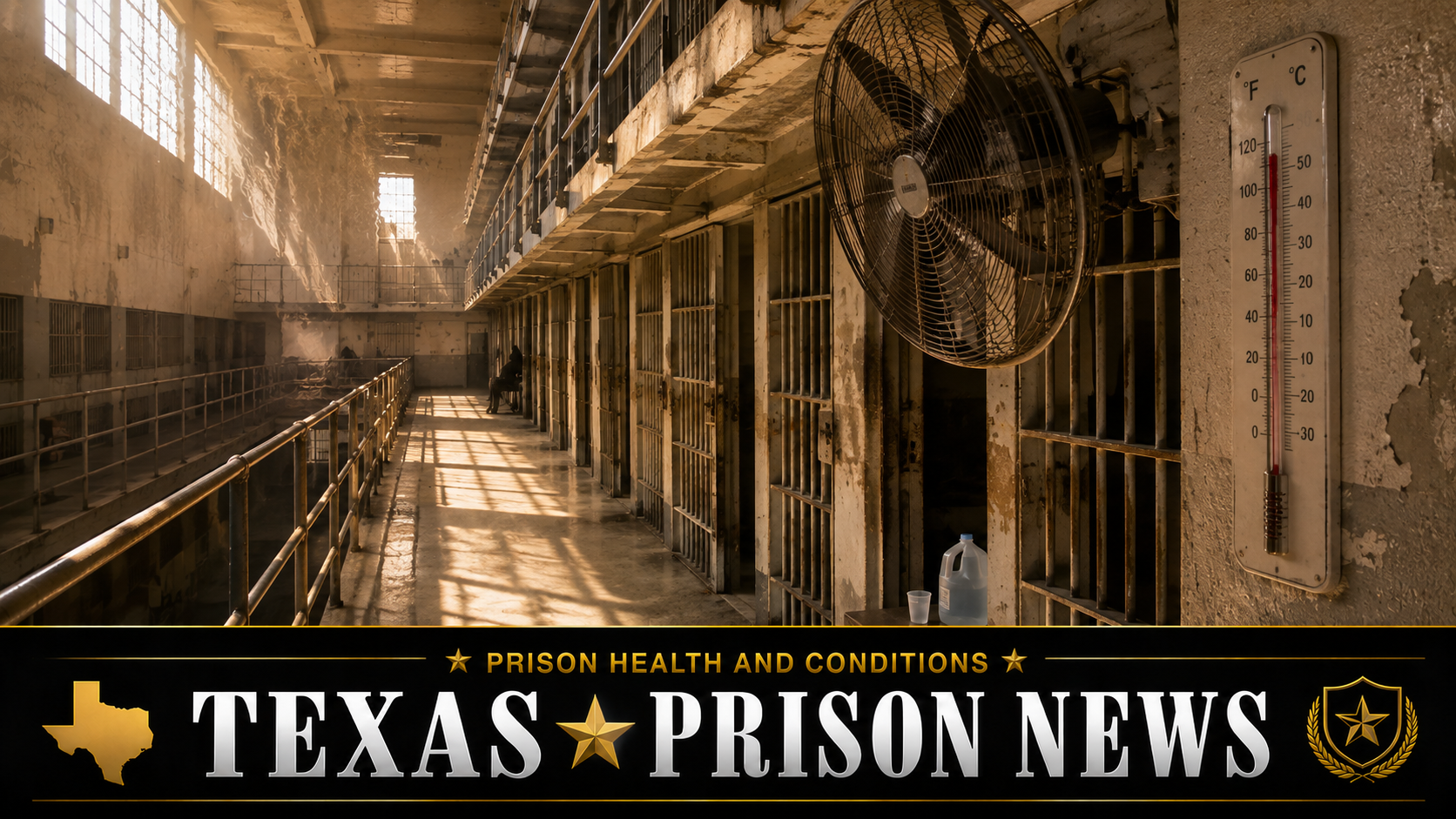

TEXAS — Another summer of extreme heat has renewed scrutiny of conditions inside Texas prisons, where many housing areas still lack universal air conditioning.
Letters and interviews published by Texas news organizations describe cells that remain dangerously hot after sunset, interrupted sleep, soaked clothing and prisoners relying on fans, water and improvised cooling methods. People with diabetes, heart disease, hypertension and other health problems face heightened risk.
A preventable health danger
Heat illness can begin with cramps, headache, dizziness, nausea or confusion and progress to organ damage or death. In a locked institution, incarcerated people cannot relocate to a cooler building on their own. Protection depends on adequate drinking water, working fans, access to cooled respite areas, medical screening and staff responding promptly when symptoms are reported.
TDCJ has said it uses mitigation measures including water, ice, showers and respite areas. Advocates and families argue those measures are inconsistent and cannot substitute for climate-controlled housing during prolonged triple-digit weather.
Courts and lawmakers face the issue
Litigation has increased pressure on Texas to protect medically vulnerable prisoners. Reports about Bernhardt Tiede, who has diabetes and hypertension and suffered a stroke in 2023 after exposure to cell temperatures described in court records as exceeding 110 degrees, illustrate the stakes.
The policy question is no longer whether Texas summers are hot. It is whether the state will establish enforceable temperature standards, identify vulnerable prisoners before emergencies occur and fund permanent cooling upgrades.
Families should document reports of heat illness, dates, housing locations and requests for medical care. Anyone experiencing confusion, fainting, chest pain or loss of consciousness requires immediate medical attention.